
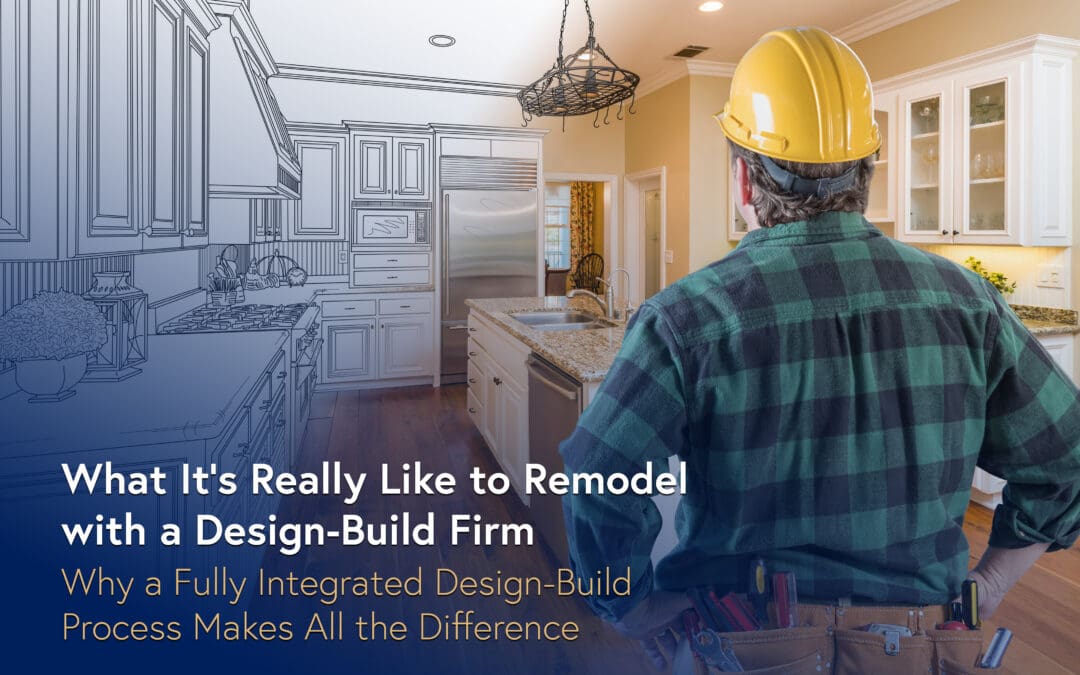
What is a Design-Build Remodeling
Remodeling your home is exciting — but for many homeowners, it’s also filled with uncertainty. Click here to find out what Consumer Reports Magazine and other experts suggest considering before jumping into the remodeling process.
If you’ve heard remodeling horror stories, you’re not alone. Most of them stem from one core issue: The homeowner and the contractor were on two different pages. The homeowners were expecting X and the contractor thought he or she was delivering Y. This usually is discovered well into the start of the project and starts the oh so similar, butting of the heads. That is why homeowners and contractors should slow down and do the necessary homework and pre-planning before any contract is signed and before any work begins.
That’s where Design-Build is different. Design build falls under one roof where the designer, the estimator and the production team works with homeowners to carefully develop a project touching on every design detail, chooses every product being installed and the cost associated to complete the project. Nothing is left to chance.
In this guide, we’ll walk you through what it’s really like to remodel with a fully integrated Design-Build firm — and why that structure dramatically changes your experience from day one to final walkthrough.
What “Design-Build” Actually Menas (And Why It Matters)
The term “Design-Build” gets used frequently in the remodeling industry — but not all Design-Build firms operate the same way.
- Some limit homeowners to pre-set layouts and material packages.
- Some rely on one generalist managing everything.
- Some prioritize speed and low cost over customization and quality.
As we explain in Design-Build Isn’t One-Size-Fits-All, the structure and depth of a firm’s design process can vary dramatically.
A true Design-Build firm integrates:
- Dedicated designers
- Project Estimators
- Construction professionals
- A defined planning process
- Transparent budgeting
- Clear communication
The difference isn’t just organizational — it’s experiential.
Step 1: The First Conversation Is About You – Not Just the Project
With a traditional remodel, the first meeting often focuses on measurements and rough pricing.
With Design-Build, the first conversation focuses on:
- How you live in your home
- What isn’t working
- Your long-term plans
- Your priorities and concerns
- Your investment comfort range
This foundation matters because remodeling isn’t just about construction — it’s about improving how your home functions for your life.
Step 2: The Design Phase Is Thorough – and Intentional
One of the biggest advantages of Design-Build is the depth of the design phase.
Before construction begins, your team works through:
- Layout exploration
- Structural feasibility
- Material selections
- Finish coordination
- Budget alignment
- 3D renderings and visualizations
- Scope clarity
This is where many traditional remodels go wrong.
When design and construction are separated, contractors often discover conflicts after demolition begins. That’s when surprises, delays, and change orders appear.
In a Design-Build model, construction professionals collaborate during design — identifying challenges early, before they become costly problems.
Step 3: Budget Alignment Happens Before Construction Starts
Budget overruns typically happen when pricing and design evolve separately.
In Design-Build, budget development is integrated with design refinement. As selections are made and scope is clarified, pricing is updated in real time.
This creates:
- Clear expectations
- Transparent allowances
- Fewer change orders
- Reduced financial anxiety
As discussed in Addressing Common Home Remodeling Fears: The Power of Design Build, this early alignment directly addresses one of homeowners’ biggest concerns: “Will we exceed our budget?”
Step 5: One Team, One Contract, One Plan
Traditional remodeling often involves:
- Separate designer contracts
- Separate contractor agreements
- Independent consultants
- Conflicting timelines
When something goes wrong, accountability gets blurred.
With Design-Build:
- You sign one contract.
- You work with one unified team.
- Everyone operates under one plan.
There’s no finger-pointing — only problem-solving.
Step 5: Construction Feels More Structured (and Less Stressful)
When planning is thorough, construction becomes more predictable.
You can expect:
- A defined project schedule
- Clear communication touchpoints
- Site protection and dust control
- Regular progress updates
- Proactive issue management
Because the design was vetted before construction, the team isn’t making major decisions mid-project. Instead, they’re executing a plan everyone already understands.
This dramatically reduces the stress many homeowners associate with remodeling.
What “No Suprises” Actually Means
When Design-Build firms say “no surprises,” it doesn’t mean the unexpected never happens — especially in remodeling older homes.
It means:
- Surprises are minimized through early planning and site visits.
- Risks are discussed transparently.
- Contingencies are built into expectations.
- Communication stays consistent if adjustments are needed.
It means you’re never left wondering what’s happening or why.
Design-Build vs. Traditional Remodeling: Where Projects Go Wrong
Most remodeling frustrations trace back to gaps between design and construction:
- Designs that exceed budget
- Contractors interpreting plans differently
- Late material decisions
- Incomplete scopes
- Reactive change orders
When teams work separately, problems are discovered late.
In a true Design-Build environment, those conversations happen early — during planning — when changes are easier and more affordable.
So What Is It Really Like?
Homeowners often describe remodeling with a fully integrated Design-Build firm as:
- Structured instead of chaotic
- Collaborative instead of fragmented
- Transparent instead of uncertain
- Planned instead of reactive
It doesn’t eliminate every challenge — remodeling is complex. But it replaces guesswork with process and replaces anxiety with clarity.
And that difference is everything.
Is Design-Build Right for You?
Design-Build is especially beneficial if you:
- Want a cohesive, customized design
- Value upfront planning over rushed construction
- Prefer clear financial transparency
- Don’t want to coordinate multiple vendors
- Appreciate defined systems and accountability
If you’re exploring a kitchen renovation, bathroom remodel, home addition, or whole-home renovation, understanding the structure behind the firm you choose may matter more than any individual design detail.
Because the process shapes the outcome.
Why the Process Matters Most
Remodeling isn’t just about new cabinetry, expanded square footage, or upgraded finishes.
It’s about the experience of getting there.
A true Design-Build firm doesn’t just build your project — it builds a structured path from idea to execution, reducing friction, increasing clarity, and protecting your investment along the way.
If you’d like to learn more about how our process works, explore:
Because when remodeling is done right, it shouldn’t feel overwhelming.